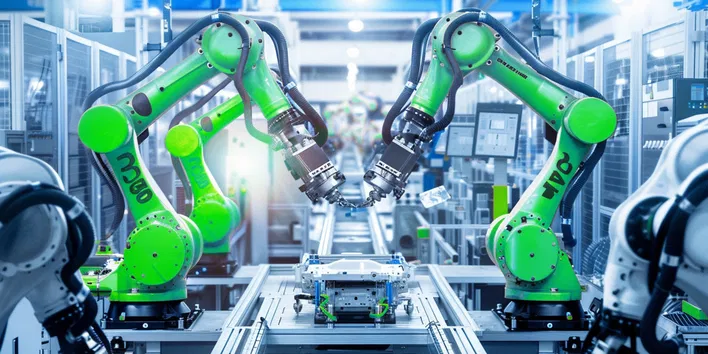

Artificial Intelligence (AI) is rapidly transforming how organizations operate, compete, and make decisions. What once required human judgment and manual effort can now be executed with speed, precision, and scale. Modern AI trends are accelerating automation while enhancing data-driven decision-making, creating smarter and more agile industries worldwide.
The Growing Influence of Artificial Intelligence
AI has evolved beyond experimental technology into a core business enabler. With access to massive datasets and advanced algorithms, AI systems can analyze patterns, predict outcomes, and act autonomously. This shift allows organizations to focus on strategy and innovation rather than routine execution.
Intelligent Automation Transforming Workflows
Automation powered by AI goes beyond rule-based systems. Intelligent automation combines machine learning, natural language processing, and computer vision to handle complex tasks.
Key benefits of AI-driven automation include:
-
Faster task execution
-
Reduced operational costs
-
Higher accuracy and consistency
-
Improved scalability across operations
Industries are using intelligent automation to streamline processes that once required extensive human involvement.
Machine Learning Enhancing Predictive Capabilities
Machine learning enables systems to learn from historical data and improve over time. This capability is critical for forecasting trends and anticipating challenges before they occur.
Common machine learning applications include:
-
Demand and sales forecasting
-
Fraud detection
-
Predictive maintenance
-
Customer behavior analysis
By leveraging predictive insights, organizations can move from reactive responses to proactive strategies.
AI-Powered Decision Support Systems
Decision-making is becoming increasingly complex due to the volume of available data. AI-powered decision support systems help leaders make informed choices by analyzing data at scale.
These systems support:
-
Real-time performance monitoring
-
Scenario analysis and simulations
-
Risk assessment
-
Strategic planning
AI does not replace human judgment but enhances it by providing clear, data-backed insights.
Natural Language Processing Improving Human–Machine Interaction
Natural Language Processing (NLP) allows machines to understand, interpret, and respond to human language. This trend is making AI more accessible and intuitive.
Key NLP-driven innovations include:
-
Conversational chatbots
-
Voice-enabled assistants
-
Automated document analysis
-
Sentiment analysis for customer feedback
Improved communication between humans and machines accelerates both automation and decision-making efficiency.
Robotic Process Automation with AI Integration
Traditional robotic process automation (RPA) follows predefined rules. When combined with AI, RPA becomes adaptive and intelligent.
AI-enhanced RPA enables:
-
Handling unstructured data
-
Learning from process variations
-
Automating judgment-based tasks
-
Improving workflow flexibility
This integration is particularly impactful in finance, healthcare, and customer service operations.
Data-Driven Cultures Enabled by AI
AI trends are encouraging organizations to build data-driven cultures. Decisions are increasingly guided by insights rather than intuition alone.
Organizations adopting AI-driven decision-making experience:
-
Improved strategic alignment
-
Faster response to market changes
-
Greater transparency in operations
-
Enhanced competitive advantage
A strong data foundation is essential for maximizing AI’s potential.
Ethical and Responsible AI Development
As AI adoption grows, ethical considerations are becoming a major trend. Organizations are prioritizing responsible AI practices to ensure trust and compliance.
Key focus areas include:
-
Transparency in AI decisions
-
Bias reduction in algorithms
-
Data privacy and security
-
Human oversight in critical decisions
Responsible AI strengthens long-term sustainability and public confidence.
Preparing for an AI-Driven Future
To fully benefit from AI trends, organizations must:
-
Invest in AI literacy and workforce upskilling
-
Align AI initiatives with business goals
-
Ensure high-quality data governance
-
Foster collaboration between technical and business teams
AI-driven automation and decision-making are not future concepts—they are defining today’s competitive landscape.
Frequently Asked Questions (FAQs)
What are artificial intelligence trends?
Artificial intelligence trends refer to emerging patterns in AI development and usage that influence automation, analytics, and decision-making processes.
How does AI accelerate automation?
AI enables systems to learn, adapt, and handle complex tasks, allowing automation beyond simple rule-based processes.
Can AI improve decision-making accuracy?
Yes, AI analyzes large datasets to uncover insights and patterns that improve the accuracy and speed of decisions.
Is AI replacing human decision-makers?
AI supports human decision-making by providing insights, but strategic and ethical judgments still require human involvement.
Which industries benefit most from AI-driven automation?
Industries such as finance, healthcare, manufacturing, retail, and logistics see significant benefits from AI adoption.
What skills are important in an AI-driven workplace?
Data literacy, analytical thinking, AI system management, and ethical awareness are increasingly important skills.
Are there risks associated with AI decision-making?
Yes, risks include bias, data privacy issues, and over-reliance on automation, which is why responsible AI practices are essential.