
Most men don’t give their trouser drawer much thought until they’re standing in front of it at 8am trying to remember where they put their belt. Casual dressing sounds easy — it’s supposed to be relaxed, after all — but there’s a surprising amount of chaos lurking in that space between smart trousers and tracksuit bottoms. Getting it right matters more than you might expect, mostly because the wrong pair can make an otherwise decent outfit look like it gave up halfway through.
The British men’s clothing market has shifted enormously over the past decade. Working from home has changed what people actually wear day-to-day, and there’s been a rethink about what ‘smart casual’ means. Office dress codes have softened, pubs have smartened up, and the average weekend now involves a much wider range of situations than it used to. Your trousers need to keep up with that.
What Actually Makes a Good Casual Trouser
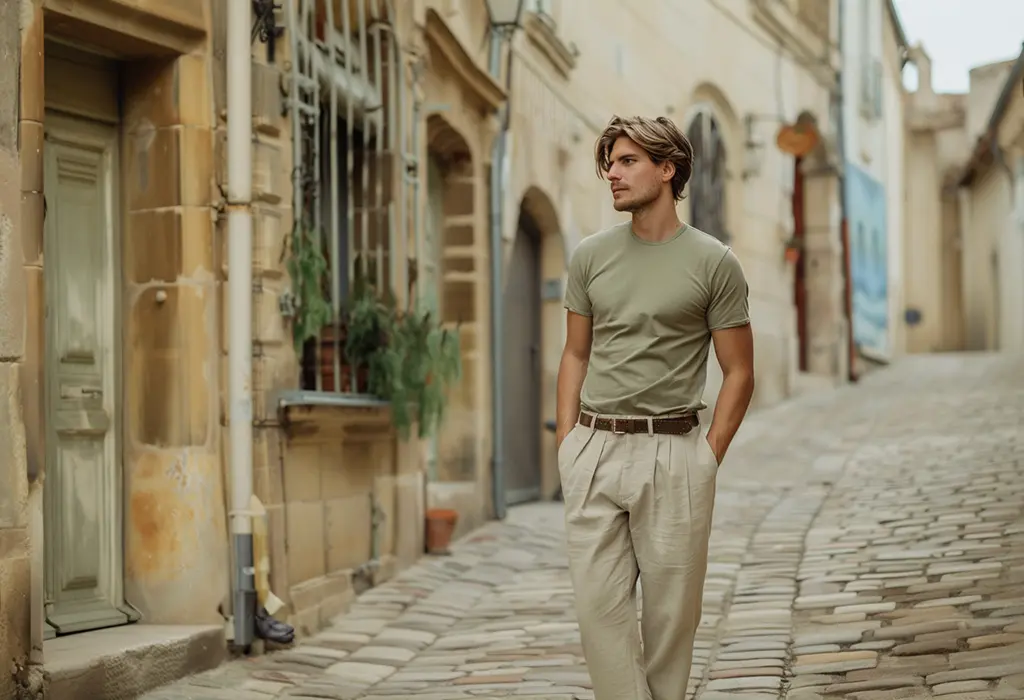
Fit is everything, frankly. A cheap, well fitting, pair will always look better than an expensive pair that doesn’t, and this is where a lot of men go wrong. Too baggy and you look messy, but too slim and the whole thing reads as trying too hard. The sweet spot is a relaxed straight leg or a tapered cut that doesn’t pinch at the thigh — comfortable to sit in, not embarrassing to stand up in.
Fabric matters quite a bit too, especially in the UK where the weather does whatever it wants. Cotton chinos are the reliable workhorse — breathable enough for a warm day, sturdy enough for a drizzly autumn afternoon in Leeds or Cardiff. Linen is glorious in July and basically unwearable by October. Stretch fabrics have improved enormously and are genuinely worth considering if you’re on your feet a lot or you want something that transitions from a walk to a pub lunch without issue.
Colour is where most men play it too safe. Navy, grey, and stone are all perfectly sensible, and yes, they go with almost everything — but there’s no law against trying olive green or a warm terracotta if your wardrobe is currently just variations of beige. That said, the basics exist for a reason. If you’re building from scratch, start with two or three neutral pairs before you go anywhere near burgundy.
What You’re Actually Wearing Them For
This is the question that tends to get ignored, and it shouldn’t. A pair that’s great for a Sunday walk in the Peak District isn’t necessarily the one you want for a birthday dinner at a decent restaurant. It’s worth being honest about your actual life rather than buying for some imaginary version of it. If most of your weekends involve DIY, errands, and the occasional trip to a garden centre, buy accordingly. If you’re regularly going out for meals or heading into town, lean towards something a bit more structured.
There’s a solid range of casual trousers for men over at Chums that covers a decent spread of styles and fits, which is useful if you’re trying to replace a few pairs at once without ending up with five things that all look identical. Finding options that are cut for a more relaxed fit is genuinely harder than it should be on a lot of high street sites, so it’s worth checking specialists who actually stock a proper size range.
The Practical Stuff Nobody Mentions
Waistbands. Nobody talks about waistbands. A fully elasticated waist is fine — comfortable, practical, and honestly preferable to a rigid waistband if you’re sitting at a desk most of the day. Part-elastic is also common and tends to look a bit neater at the front while still giving you some give at the back. The fully buttoned, no-give waistband is fine if the fit is genuinely good, but if you’re in between sizes, it’s a recipe for discomfort about twenty minutes after lunch.
Pockets, too. Zip-fasten pockets are underrated for anyone who’s ever lost their phone down the back of a sofa cushion while wearing trousers with shallow side pockets. Small thing, but you notice it.
The honest truth is that casual dressing requires a bit more thought than it lets on. It’s not about buying expensive things or following trends — it’s about knowing what you need, buying it in the right fit, and not replacing perfectly good trousers just because something newer turned up. A bit boring, maybe, but your wardrobe will thank you for it.